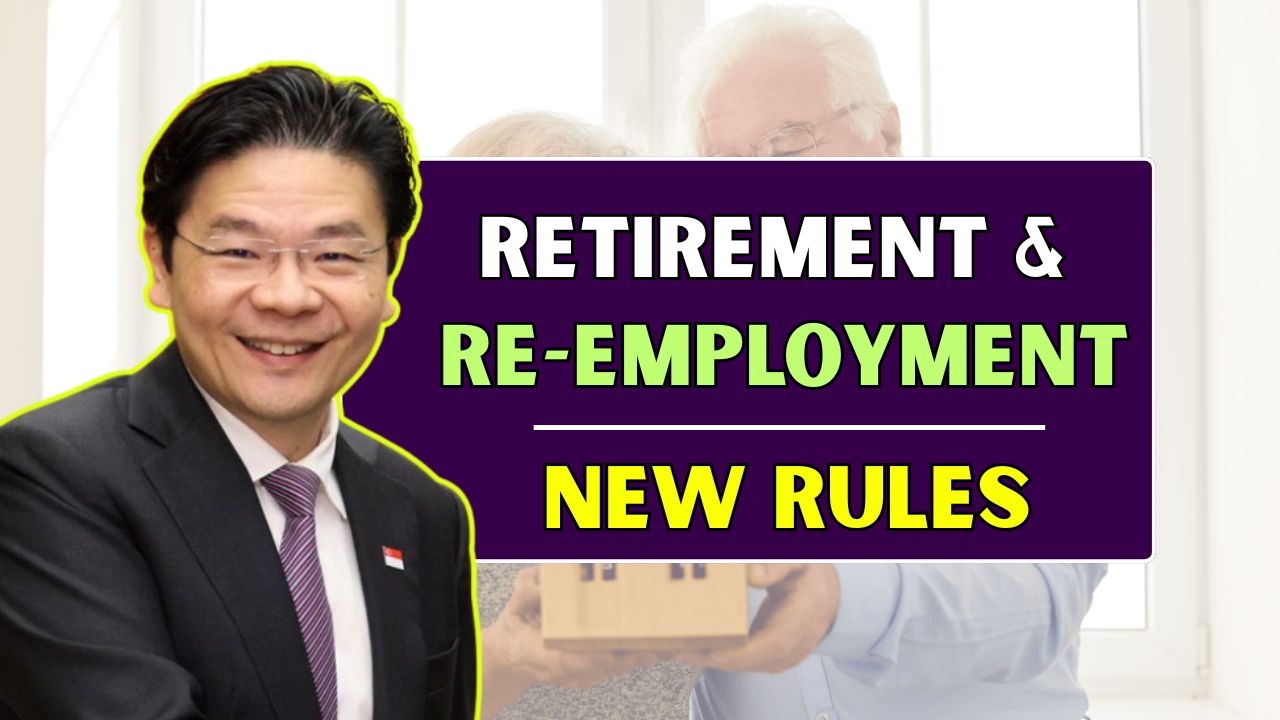
Singapore continues to refine its retirement and re-employment framework to support an ageing workforce. In 2026, existing policies remain focused on helping older workers stay economically active while providing security and fairness for both employees and employers.
Official Retirement Age Remains Unchanged
The statutory retirement age remains the point at which an employer may retire an employee according to the Employment Act. This ensures clarity and consistency for workers planning their long-term careers and retirement timelines.

Re-Employment Age and Extended Work Opportunities
After reaching retirement age, eligible employees can be offered re-employment up to the prescribed re-employment age. This allows capable and willing workers to continue earning income, stay engaged, and build additional retirement savings.

Eligibility Conditions for Re-Employment
To qualify for re-employment, workers must meet basic criteria such as satisfactory job performance and medical fitness. Employers are required to offer re-employment where conditions are met, reinforcing job security for older employees.
Employment Terms During Re-Employment
Re-employment contracts may come with adjusted job scopes, working hours, or wages, depending on mutual agreement. These flexible arrangements help balance productivity needs while supporting older workers’ health and work-life balance.

Employer Responsibilities and Support Measures
Employers are encouraged to redesign jobs and create age-friendly workplaces. Government support schemes continue to assist businesses in retaining mature workers through grants and training initiatives.
Conclusion
The Singapore retirement and re-employment rules for 2026 continue to emphasise flexibility, fairness, and opportunity. By allowing workers to stay employed longer while safeguarding their rights, the framework helps individuals strengthen financial security and supports a sustainable, inclusive workforce.