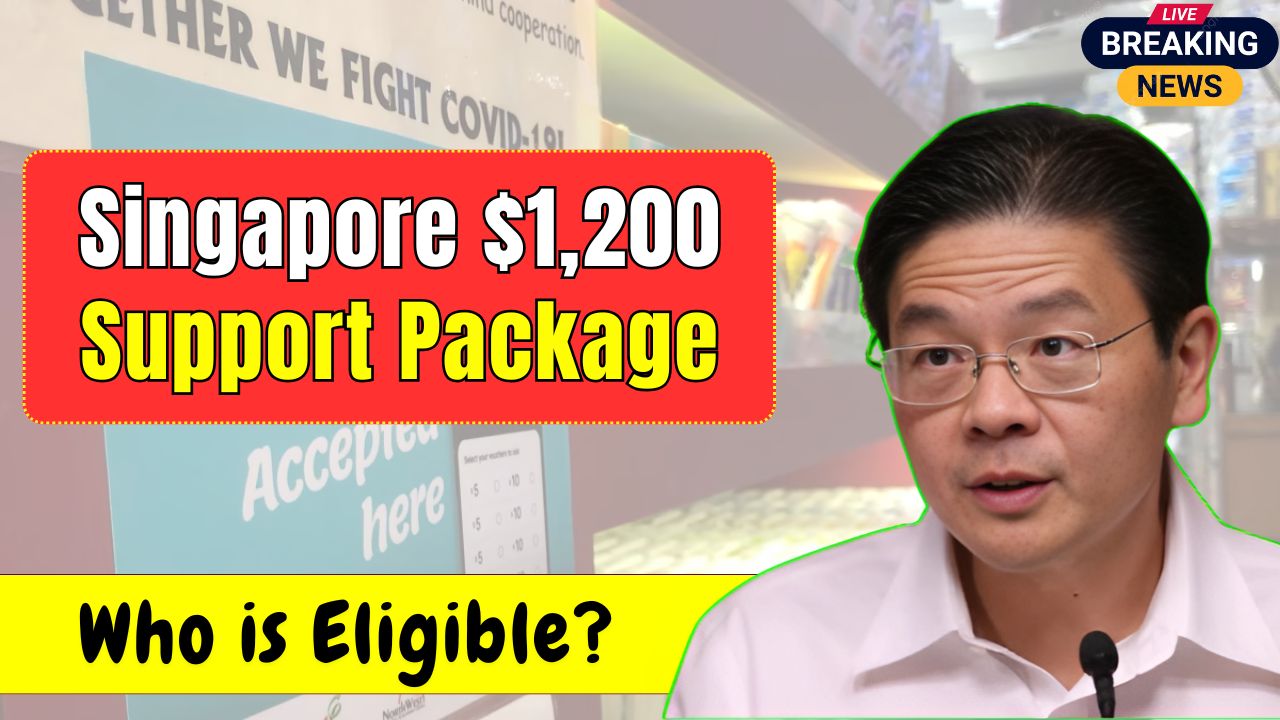
The Singapore government has confirmed a $1,200 support package designed to assist residents with the rising cost of living and everyday expenses. This one-time or periodic package aims to provide meaningful financial relief to eligible individuals and families in 2025.
Purpose of the Support Package
Rising costs in areas such as housing, food, utilities, and transport have prompted authorities to introduce this support. The $1,200 package is part of a broader effort to help Singaporean households stay financially resilient in the face of economic pressures and inflation.

Who Is Eligible for the $1,200 Support
Eligibility for the $1,200 support package generally depends on key criteria such as income level, citizenship status, and household composition. Priority is given to those with demonstrable financial need, including lower- and middle-income households, seniors, and residents with limited resources.

Income and Residency Requirements
To qualify, applicants typically must meet specified income thresholds that reflect household earnings below a set level. In addition, support is generally reserved for citizens or permanent residents who are legally residing in Singapore and meet the government’s residency conditions.
Household Circumstances That May Qualify
Support is often tailored to household circumstances. Families with children, seniors living alone, or households facing high essential costs may receive the $1,200 assistance more readily. Residents with irregular or low incomes are also likely to be prioritised.

How the Support Is Delivered
Once eligibility is confirmed through government records or verification systems, the $1,200 support is usually disbursed directly to the recipient’s registered bank account or through a central payment platform. No additional application may be required if the individual’s information is already on file and up to date.
Conclusion
Singapore’s $1,200 support package provides critical financial assistance to eligible residents, particularly those facing economic strain. By focusing on income levels and household circumstances, the government ensures that support reaches those who need it most, helping families manage everyday expenses and maintain stability.