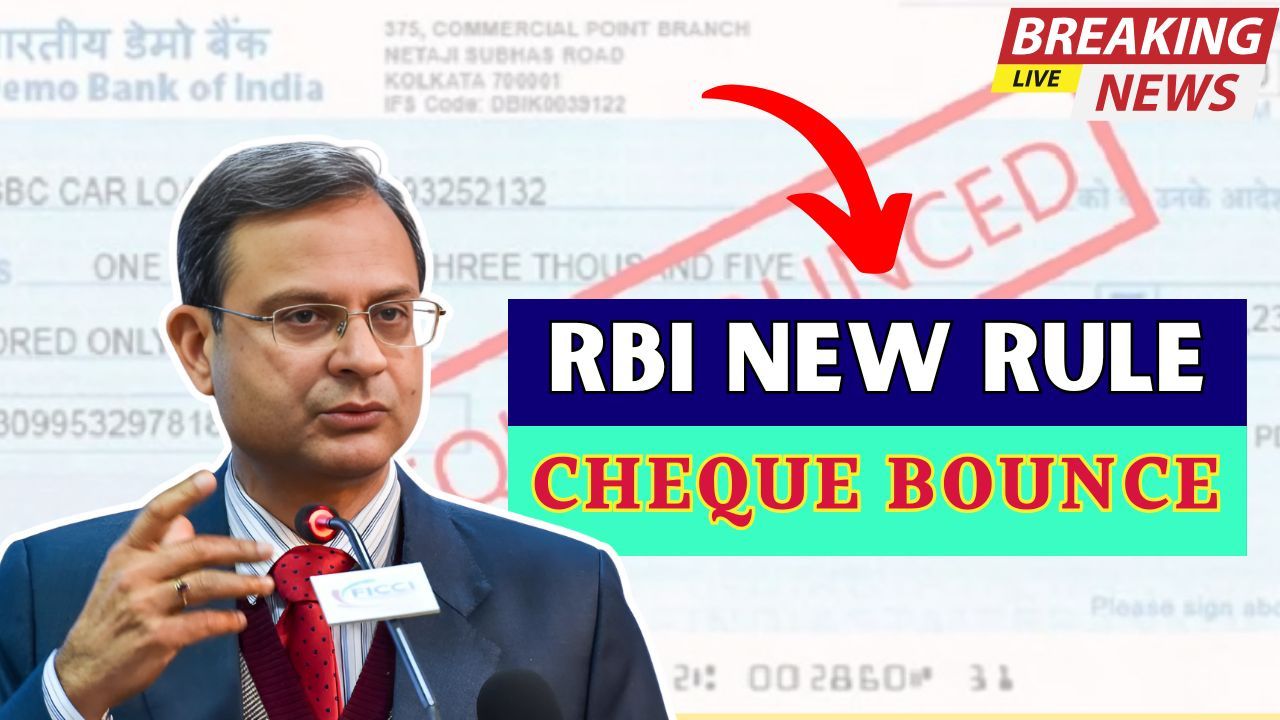
The Reserve Bank of India (RBI) has introduced strict cheque bounce rules for 2025, aiming to reduce payment fraud and ensure timely settlements. The new regulations impose double financial penalties and even jail time for individuals or businesses that issue cheques without sufficient balance.
Why RBI Introduced Stricter Rules
Cheque bounce cases have increased in recent years, causing delays in payments and financial losses to recipients. To restore trust in cheque-based transactions and ensure accountability, the RBI has announced stronger legal actions effective from 2025.
Double Penalty for Cheque Bounce
Under the updated rules, if a cheque bounces due to insufficient funds, the issuer may be required to pay double the cheque amount as penalty. This aims to discourage careless or fraudulent cheque issuance and protect the receiver from financial trouble.

Jail Time for Repeated Offenders
While first-time offenders may face penalties and a warning, repeated cheque bounce incidents can now lead to jail time. Depending on the severity, courts can impose imprisonment to ensure strict compliance and prevent intentional fraud.
Impact on Individuals and Businesses
These rules affect everyone who deals with cheque payments salary transactions, business invoices or personal payments. Businesses issuing post-dated cheques must ensure adequate funds to avoid legal consequences. Individuals must maintain proper balance before issuing any cheque.

Banking Restrictions After Multiple Bounces
If an account sees multiple cheque bounces, banks may place restrictions on issuing new cheque books. In extreme cases, the bank may report the account as high-risk.
Legal Action Under Revised Law
Banks will now be quicker in reporting cheque bounce cases to the court.
The new checklist includes:

- Faster notice to the issuer
- Quicker filing process
- Higher chances of court-imposed penalties
These steps make cheque bounce cases more enforceable and harder to escape.
How to Avoid Cheque Bounce in 2025
To stay safe under the new rules:
- Always maintain sufficient balance before issuing a cheque
- Avoid giving post-dated cheques without financial planning
- Check cheque details carefully for errors
- Keep a track of due dates and payments
Effect on Loan and EMI Payments
If a cheque bounces for EMI payments, the borrower may face extra charges, negative credit scores, and now even legal consequences. Borrowers are advised to switch to auto-debit or UPI mandates to avoid risks.

Conclusion
The RBI Cheque Bounce Rules 2025 bring strict fines and possible jail time to maintain financial discipline. Individuals and businesses must ensure proper balance and accuracy before issuing cheques to avoid legal trouble.