The Employees’ Provident Fund (EPF) is a significant savings investment for employees who are employed in organized services in India, designed as a foundation of financial security much after retirement. One great consideration while taking an EPF is the interest that gets crystalized from the contributions on the lump sum at the point of retirement. Knowing how the EPF interest is being calculated, therefore, will suffice right on the part of its investors who will be led to make the most of their savings.
Functioning of EPF interest
The EPF interest is credited annually in the employees’ account determining the average balance that was maintained during the financial year in the same place and time. Other than the gross wages and dearness lands, there are fixed contributions made under the specifications while the central government underscores that EPF should receive an interest rate for crediting into the fund’s members’ accounts every year. The interest rate fixed for 2025-26 stands at a competitive level, providing stable returns for subscribers.

Factors Influencing the Calculation of Interest
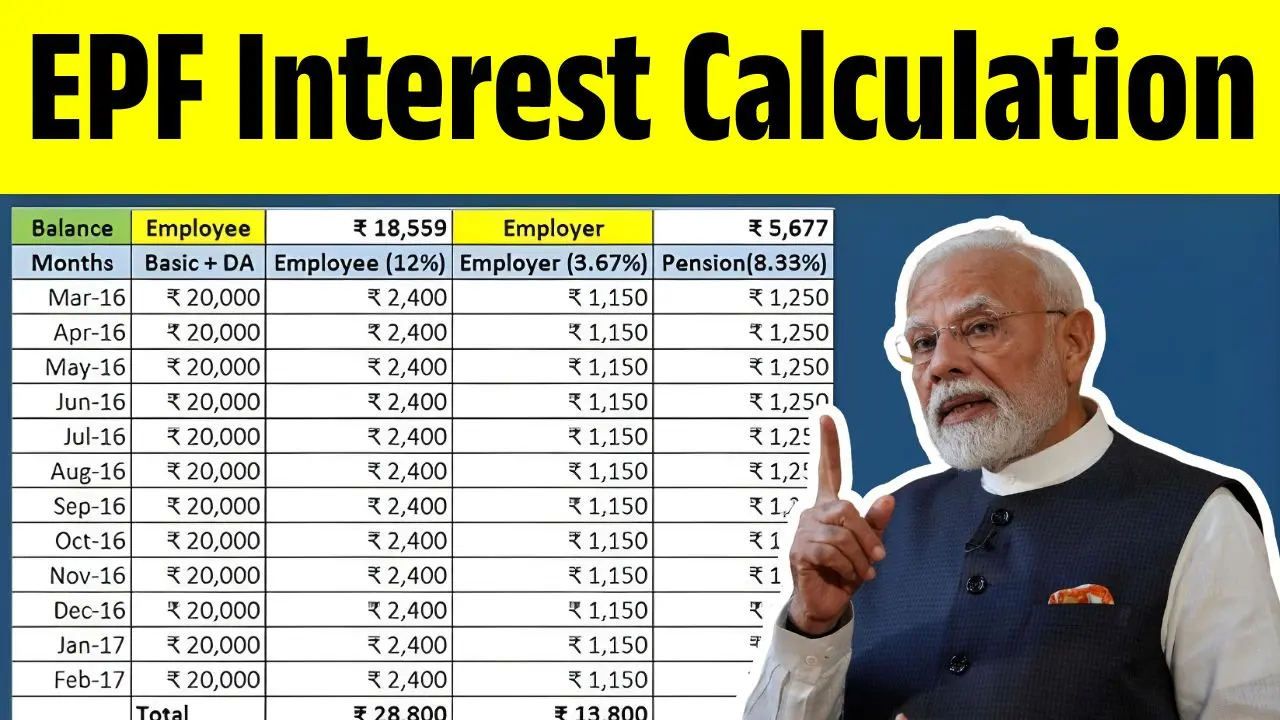
The total EPF balance of a person is calculated with the employee’s contribution, employer’s contribution, and interest that accumulated thereon. Employee’s Contribution: The employee pays roughly a total of 12 percent of his/her basic salary plus dearness allowance towards the membership with EPFO, which is required to be matched by the employer. In addition to this, the employer pays a matching contribution of 12 percent, out of which 8.33 percent goes to the Employee Pension Scheme (EPS). The remaining sum gets deposited in the EPF wielded to gain interest annually with compounding. During the year, withdrawals, partial withdrawals, and account clousers may affect the interest to be credited.

Step-by-Step Calculation Method
Also, EPF interest is payable on a monthly basis while credited on an annual basis; interest accrues on the closing balance of each month, subsequent to the original annual interest rate being multiplied by the month-end balance and divided by 12. This holds a fair play as it entitles relevantly pro rata interest for contributions made at all over the year. Since the interest awaiting in the balance is merged and calculated into the next year’s interest, the component of ESC.

Reason for Concern with Interest Rate
The knowledge of how interest is self-accomplished in EPF enables one to make prudent decisions for employee contributions, salary structure, and partial withdrawals. Larger contributions lead to an increased pool of funds for retirement not merely because of an advanced timeframe of compounding but also interest rates will keep on adjusting and this will help subscribers gauge their long-term financial gains more respectively.

In conclusion,
The calculation of EPF interest is a major factor in building a substantial retirement corpus. Employees who understand the interest calculation method and its determining factors can fine-tune their savings strategy to ensure a financially secure future in their retirement.