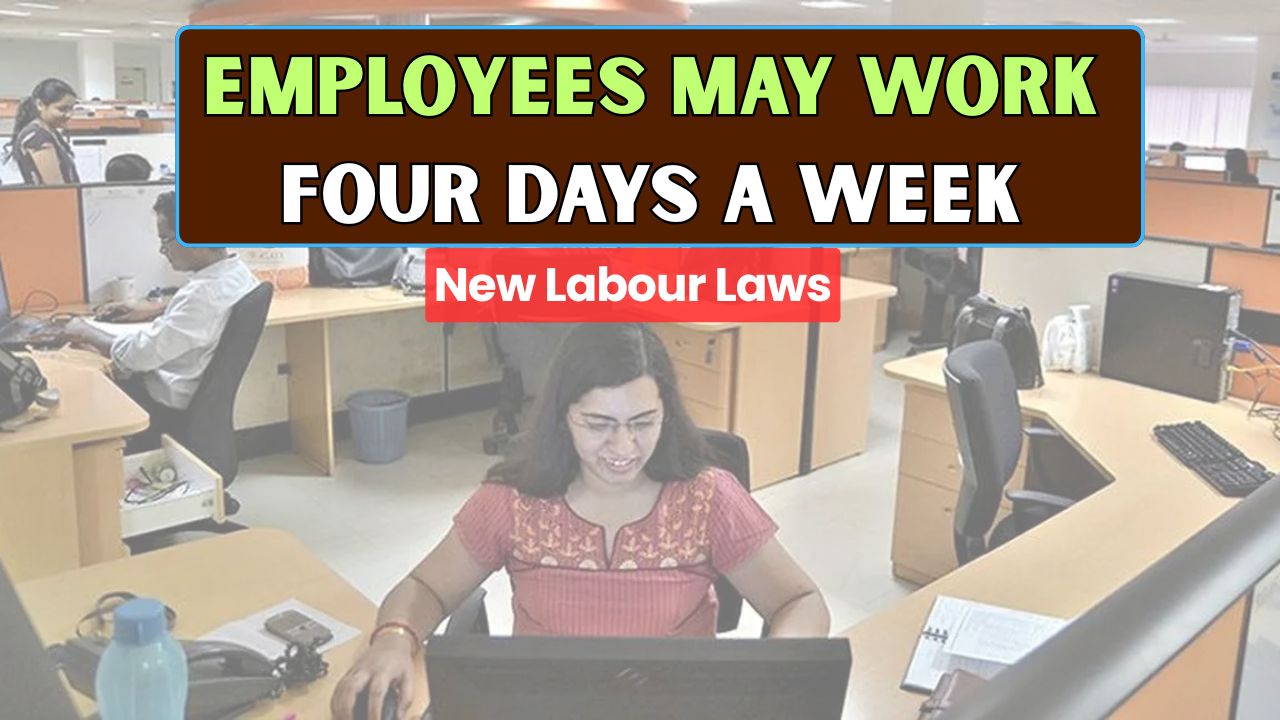
The idea of a four-day workweek has gained fresh attention after updates under India’s new labour codes. Following clarification from the Labour Ministry, employees and employers are now discussing whether working only four days a week could soon become a reality. The update has sparked widespread interest across corporate offices, factories, and service sectors.
What the Labour Ministry Has Announced
The Labour Ministry has clarified that the new labour codes allow flexibility in structuring working days, provided the total weekly working hours remain within the legal limit. This means companies may choose to implement a four-day workweek by increasing daily working hours, while still complying with the law.
Is the 4-Day Workweek Mandatory
The four-day workweek is not mandatory. The labour codes do not force employers to reduce working days. Instead, they give organizations the option to redesign work schedules based on operational needs and mutual agreement between employers and employees.

How Working Hours Will Be Calculated
Under the new framework, weekly working hours remain capped. If an organization opts for a four-day schedule, employees may need to work longer hours each day. Overtime rules and rest intervals will still apply to protect employee health and safety.
Who Can Benefit From This Change
Private companies, startups, IT firms, and service-based industries are more likely to experiment with this model. Manufacturing units and essential services may adopt it selectively, depending on productivity requirements and workforce availability.

Impact on Salary and Benefits
The Labour Ministry has clarified that salary structures will not automatically change due to fewer working days. Pay will continue to depend on total working hours and contractual terms. Employee benefits such as leave, social security, and provident fund contributions will remain protected under the new codes.
Why the Government Introduced Flexibility
The new labour codes aim to modernize India’s work culture, improve work-life balance, and boost productivity. By allowing flexible scheduling, the government wants companies to adopt globally competitive practices while ensuring employee welfare.

What Employees Should Understand
Employees should carefully review company policies before assuming a four-day schedule will apply automatically. Any change in working days must be officially communicated and agreed upon to avoid confusion.
Conclusion
The four-day workweek is now a legal possibility, not a guaranteed change. The Labour Ministry’s clarification under the new labour codes provides flexibility rather than obligation. Whether this model becomes common will depend on how employers and employees choose to adopt it in the coming years.